

What is Emotional Fitness?
Emotional fitness is the ability to work with your emotions skillfully. Not by controlling them, but by understanding them and responding with clarity.

- Emotional suppression: Says “this feeling is a problem, get rid of it.”
- Emotional fitness: Says “this feeling is information, let’s listen and respond.”
When you practice emotional fitness, you build tolerance for discomfort without numbing out. You learn how to return to calm faster after stress.
Why Nervous System Regulation Matters Everyday
If you have ever told yourself to “calm down” and your body did not cooperate, you already understand the nervous system piece. Nervous system regulation is the skill of shifting your body toward safety and steadiness on purpose.

Embodied Fitness
Your breathing, heart rhythm, muscle tension, and sleep quality all shape how resilient you feel. Daily regulation works because your nervous system learns by repetition.
Heart Rate Variability (HRV) measures the variation in time between heartbeats. Unlike heart rate, higher variability is generally better—it signals your nervous system is flexible and recovering well.
1. Breathwork that Trains Calm
Fastest ResetBreathwork is one of the fastest ways to change your internal state. Slow diaphragmatic breathing is linked to increased vagal activity and parasympathetic engagement.
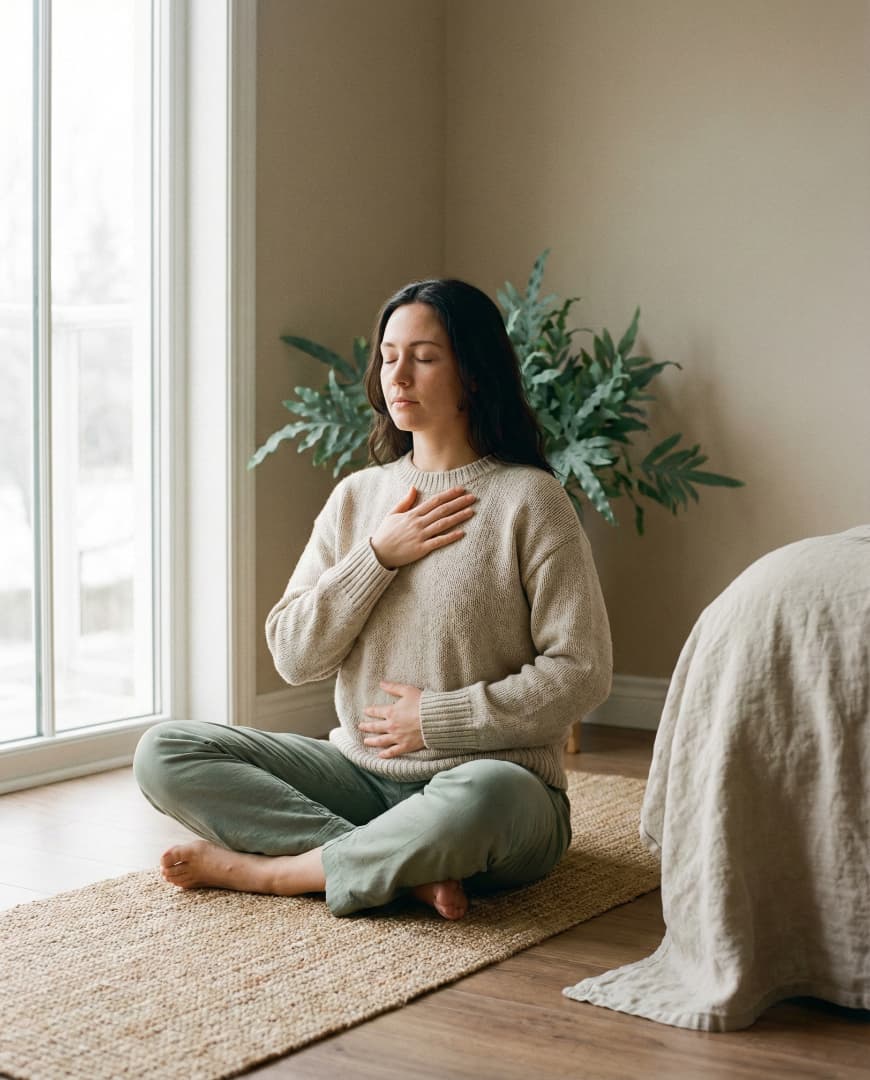
Try this 2 minute reset
- Sit tall, shoulders soft.
- Inhale through your nose for 4 seconds.
- Exhale through your nose for 6 seconds.
- Repeat for 10 cycles.
After the 10 cycles, rate your body state from 1 (calm) to 10 (activated). Over time, you want your “after” number to drop faster.
2. HRV Check ins for Stress Resilience Habits
Heart Rate Variability (HRV)—the variation in time between each heartbeat—makes stress less vague. It is a biological check-in on how balanced your nervous system is right now.

Simple interpretation rules
- If HRV dips after a stressful week, your body is asking for recovery.
- If HRV rises during consistent sleep and calming routines, you are building resilience.
- Use low HRV days as a cue for gentler inputs, not self criticism.
Look at trends, not daily spikes. Compare HRV to sleep, workload, and emotional load.
3. Micro Breaks That Prevent Nervous System Overwhelm
Micro breaks are short pauses, typically 10 minutes or less, that interrupt stress accumulation. They are generally associated with reduced fatigue and increased vigor.

Format A: 60 seconds
- Stand up.
- Drop your shoulders.
- Take 3 slow exhales.
- Look at something far away for 20 seconds.
Format B: 5 minutes
- Walk to get water.
- Stretch hips or upper back.
- Step outside or look out a window.
- Return and start one task slowly.
4. Mindful Transitions Between Tasks
One of the most underrated stress resilience habits is learning how to switch modes. Many people carry emotional intensity from one task into the next, keeping the nervous system activated.

The 30 second transition ritual
- Stop moving for one breath.
- Name the task you are leaving.
- Exhale slowly.
- Name the task you are entering.
- Start the next task at half speed for the first 60 seconds.
- Before opening your inbox.
- After a call.
- Before you walk into your home.
- Before you respond to a tense message.
5. Social Connection Cues That Calm the Body
Nervous system regulation is relational. Support social connection can buffer stress responses. This is not about forcing yourself to be social, but about small cues of belonging.

Try one “connection cue” daily
- Make eye contact and smile at someone you trust.
- Send a message that is not transactional.
- Ask one real question and listen.
- Share one honest feeling in a safe relationship.
- Offer a small act of care.
6. Journaling Emotional Cues for Clarity
The goal is pattern recognition. Identify emotional cues early so you can regulate sooner. Consistency matters more than length.

- 1. What am I feeling right now?
- 2. Where do I feel it in my body?
- 3. What happened right before this?
- 4. What is one kind response I can give myself?
7. Grounding and Meditation Rituals
Grounding is the skill of coming back to the present. Brief daily mindfulness practices have been shown to reduce anxiety and depression symptoms.

Simple grounding ritual
- Feel your feet.
- Press your toes down slightly.
- Name 3 things you can see.
- Name 2 things you can feel.
- Take one long exhale.
- Set a timer for 6 to 10 minutes.
- Focus on your breath at the nostrils.
- When you notice thought, gently return.
- End by placing a hand on your chest for 10 seconds.
The Daily Routine Map
This is the easiest way to turn the seven habits into a routine you can actually keep.
- 2 minutes breathwork.
- 2 minutes grounding.
- 2 minutes intention journaling.
- Write one sentence: “Today I want to practice responding instead of reacting.”
- One micro break.
- One mindful transition before your next task.
- One connection cue message.
- Short walk or stretch.
- 4 line journal check in.
- 6 to 10 minutes meditation.
How to Track Emotional Fitness Progress
Tracking should make you kinder and clearer, not more obsessed. Choose one of these styles.

Check in twice per day on Stress level (1-10), Body tension location, and Breath depth.
Track weekly average HRV, sleep quality, workload intensity, and emotional load.
Choose 1 word for your mood and 1 word for your need (e.g., “anxious, need reassurance”).
When to Seek Professional Support
Self guided routines support many people, but they do not replace clinical care.

- Anxiety, panic, or low mood lasts most days for several weeks.
- Sleep is consistently disrupted and you cannot recover.
- You feel numb, detached, or unable to function normally.
- You have trauma symptoms that feel unmanageable.
FAQ
How do I calm my nervous system quickly?
Use a body based method first. Slow diaphragmatic breathing with longer exhales is strongly supported in recent breathwork reviews for improving parasympathetic activity and HRV. Try 10 cycles of inhale 4 seconds, exhale 6 seconds. Then do one grounding scan: feet, shoulders, jaw.
What are the best stress resilience habits I can do daily?
The best habits are the ones you repeat. A strong starter set is: slow breathing, one micro break, one mindful transition, and one short journaling check in. Micro breaks show consistent benefits for fatigue and vigor in research reviews.
What is emotional fitness and how do I build it?
Emotional fitness is a proactive set of traits and skills that help you handle discomfort, adapt to stress, and build healthier relationships. Frameworks commonly include self awareness, curiosity, resilience, empathy, communication, mindfulness, and playfulness. You build it by practicing small daily habits that strengthen these skills.
What is HRV?
HRV (Heart Rate Variability) is the measurement of the variation in time between each heartbeat. Unlike resting heart rate, higher variability is actually a good sign—it indicates your nervous system is flexible and can recover quickly from stress.
Does HRV really measure stress?
HRV does not measure stress perfectly, but it is widely used as a marker of autonomic nervous system dynamics and is often discussed in the context of resilience and emotional regulation capacity. Use it as trend feedback, not a verdict.
How long does it take to improve emotional regulation?
Many people feel a shift quickly from breathwork or grounding, sometimes within minutes. Deeper improvement comes from repetition over weeks. Brief daily mindfulness practices have shown measurable benefits for mood and anxiety when practiced consistently.
What if journaling makes me feel worse?
That can happen, especially if you are processing trauma or intense emotions without support. Keep it short, focus on naming emotions and needs, and stop if you feel flooded. If distress rises, consider professional support. Expressive writing can help some people, but outcomes depend on timing, context, and individual factors.
Why do social connections affect stress so much?
Social closeness can modulate stress responses through neurobiological pathways including oxytocin related mechanisms, and research continues to explore how social interaction supports health regulation across adulthood. Even small cues of belonging can help your body feel safer.
Next step: 7 Day Starter Plan
Copy this into your notes if you want the easiest way to start. The plan is designed to build regulation without overload.
Daily Checklist
- Day 1: Practice the 2 minute breath reset twice
- Day 2: Add one micro break before lunch
- Day 3: Add the 30 second transition ritual before email
- Day 4: Add one connection cue message
- Day 5: Add the 4 line journal check in
- Day 6: Add 6 minutes of meditation or grounding
- Day 7: Review your notes and pick one habit to anchor
Tip: Save this guide and revisit it after 7 days to adjust what’s working.